


The U.S. Environmental Safety Company discovered no enhance in ranges of lead in ingesting water days after a managed explosion of practically 5 tons of lead azide at an Iowa Military ammunition plant, in response to a report launched Saturday.
The EPA stated that it analyzed 38 samples taken post-detonation at public water provides close to the Middletown, Iowa, plant, which included “samples of completed handled ingesting water and untreated water on the consumption.”
A water pattern is examined after the Military’s managed detonation of lead azide at its Iowa Military Ammunition Plant in Middletown, Iowa, on Nov. 25, 2026.
Environmental Safety Company
The company stated Thursday that air checks within the 30 hours after the explosion discovered “zero” ranges of airborne lead.
Assessments on soil samples are nonetheless ongoing, in response to the EPA.
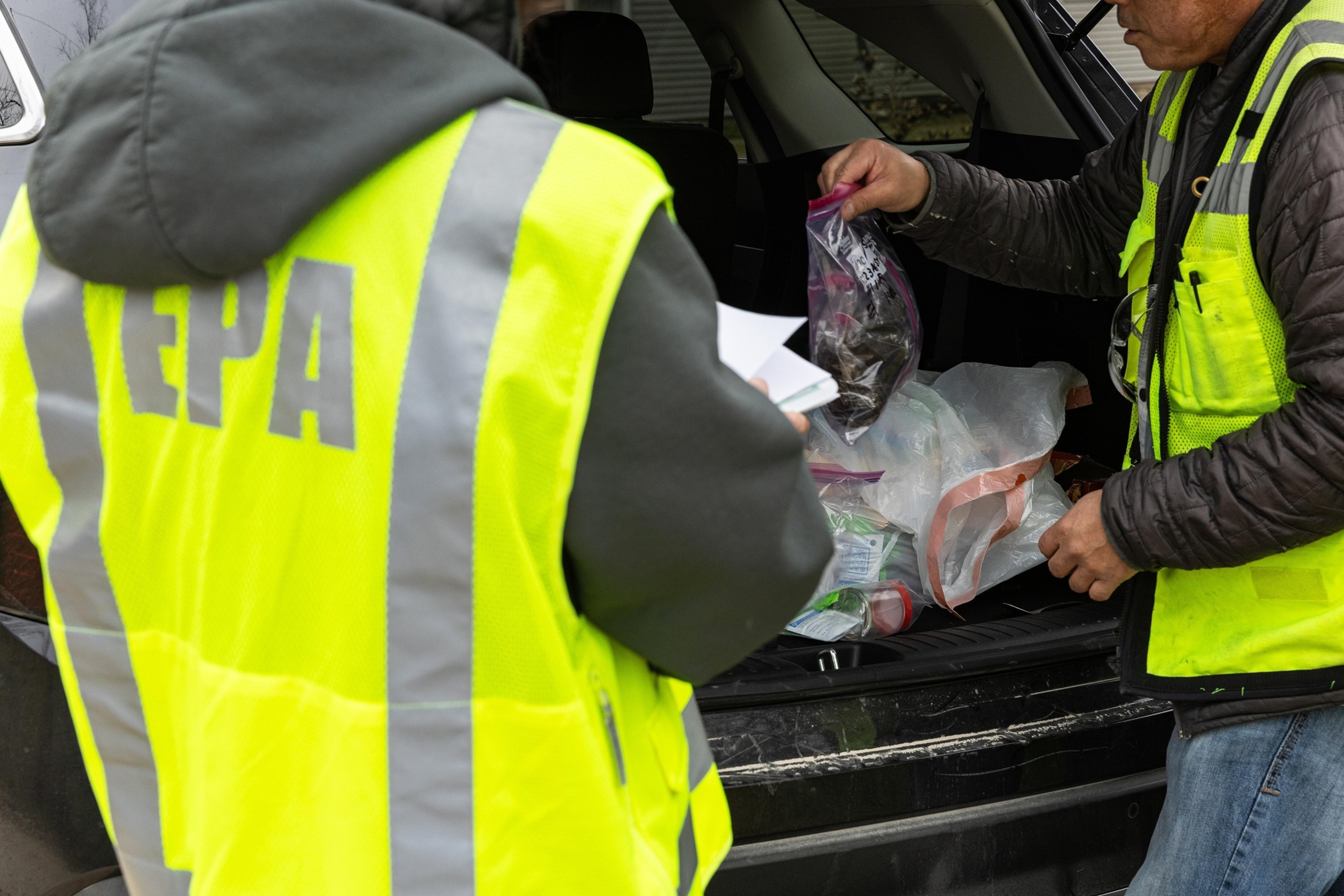
Environmental Safety Company On-Scene Coordinator Sharon Kennedy, left, catalogs soil samples collected by her employed contractors in Augusta, Iowa, Nov. 25, 2026. Augusta lies alongside the perimeter of the Iowa Military Ammunition Plant, the place earlier that day the U.S. Military detonated a stockpile of lead azide.
Austin Johnson/AP Picture
The Military detonated on Wednesday 68 barrels containing lead azide that it stated had been saved within the Iowa Military Ammunition Plant for years.
The Military stated it found in March that the explosive bomb-making materials had turn into unstable.
As a result of dangers of an unintentional, uncontrolled detonation in packing and shifting the stockpile, the Military stated it decided that the most secure option to get rid of the degraded lead azide was to destroy it in place.
Robert Cekada, the director of the Bureau of Alcohol, Tobacco, Firearms and Explosives, stated in a video assertion Wednesday that the blast drove the explosion into the bottom “and adopted a blast channel that was designed to go down the proper path to attenuate any type of dispersion of lead into the environment.”
The controversial plan raised considerations from the general public, environmental organizations and medical teams over the potential impacts of the blast’s anticipated lead mud plume.
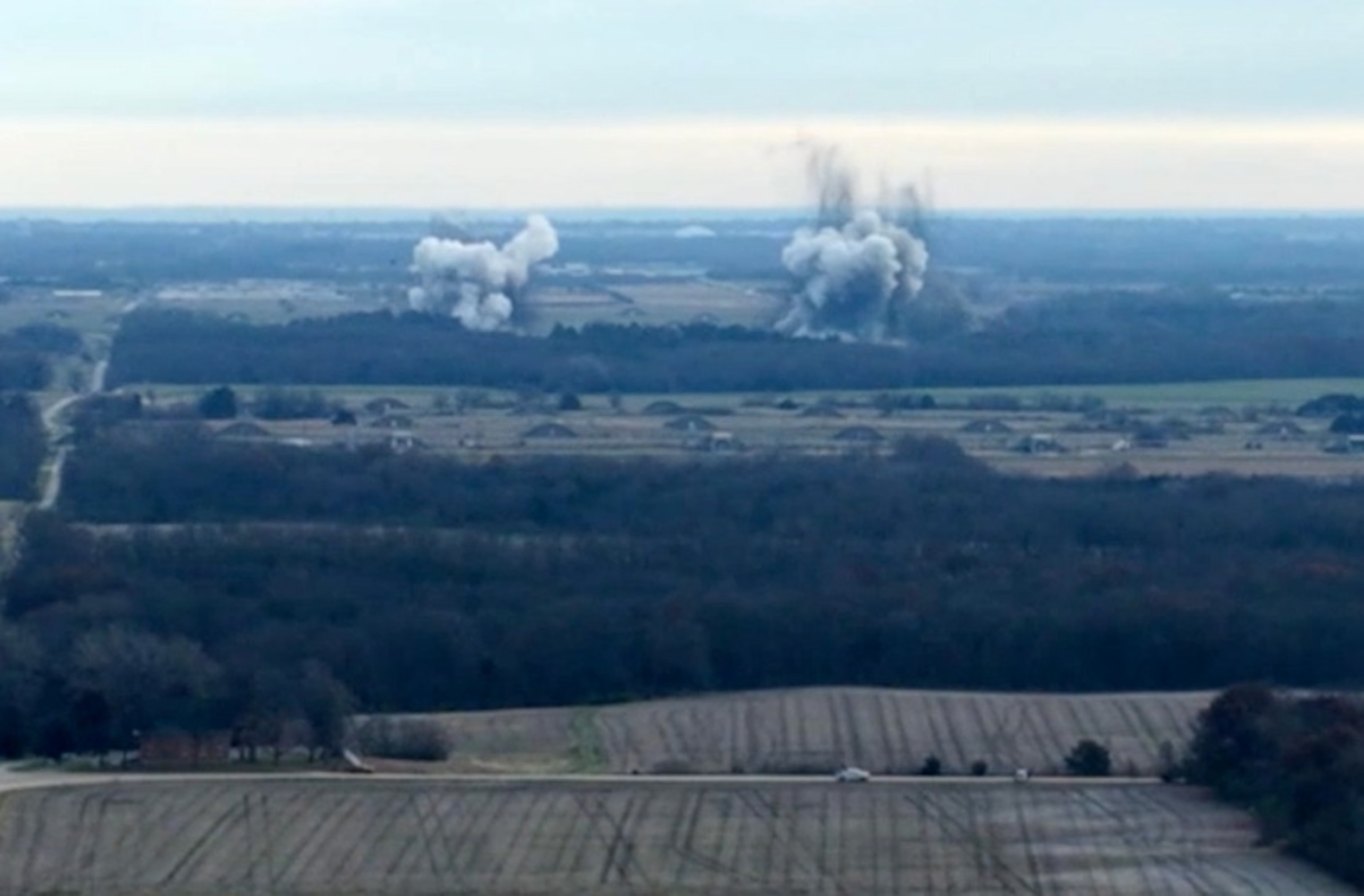
This display screen seize from a video exhibits the blast in Middletown, Iowa, on Nov. 25, 2026.
James Wilson/WeatherVaultMedia
Federal officers had issued a advisable evacuation for close by residents out of abundance of warning forward of the blast.
